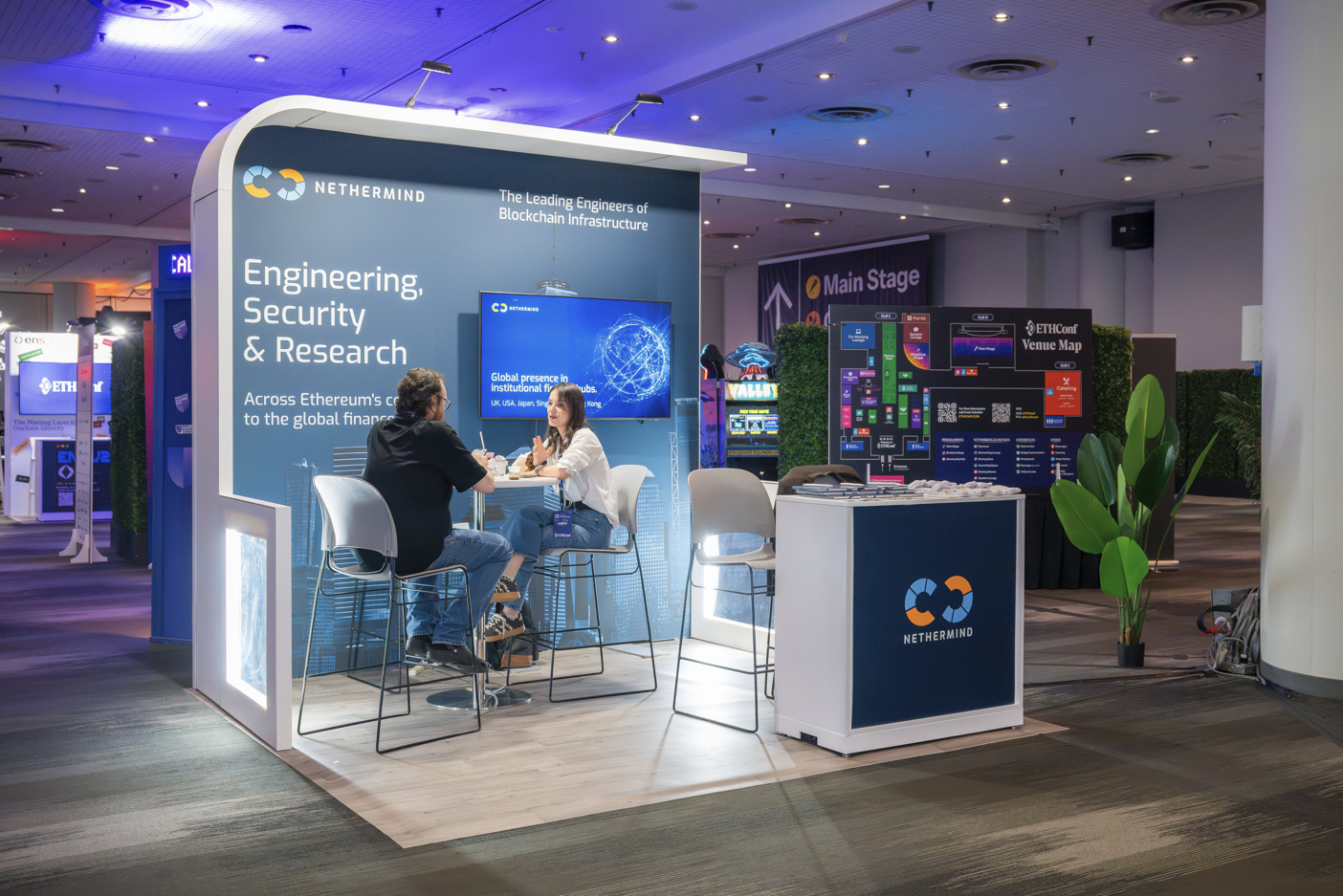
Founded in 2017, we write and maintain one of Ethereum's most widely adopted execution clients, operate nodes and validators in production, and audit and formally verify what we and others build. Today we're 200+ engineers, researchers, and security specialists applying that protocol-level expertise to work for financial institutions, reducing the operational risk of operating on public networks.
years in blockchain
Team members

Prediction markets and on-chain apps increasingly need answers to long-tail questions: did this event happen, what did this page say, who won this niche election. Existing oracle designs cannot serve this demand, since trusted operators do not scale to arbitrary questions and tokenomics-based schemes only pay off for high-value feeds.
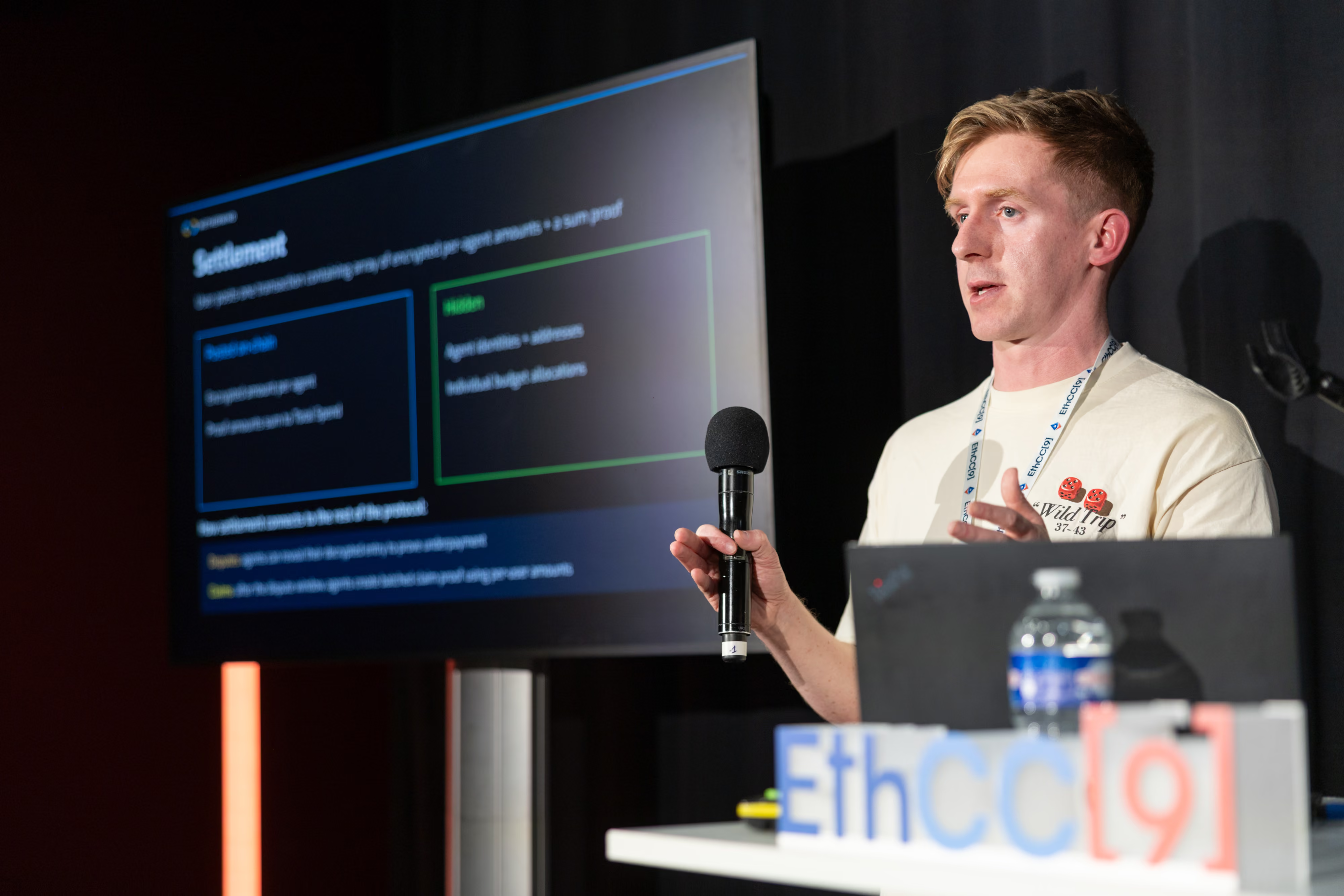
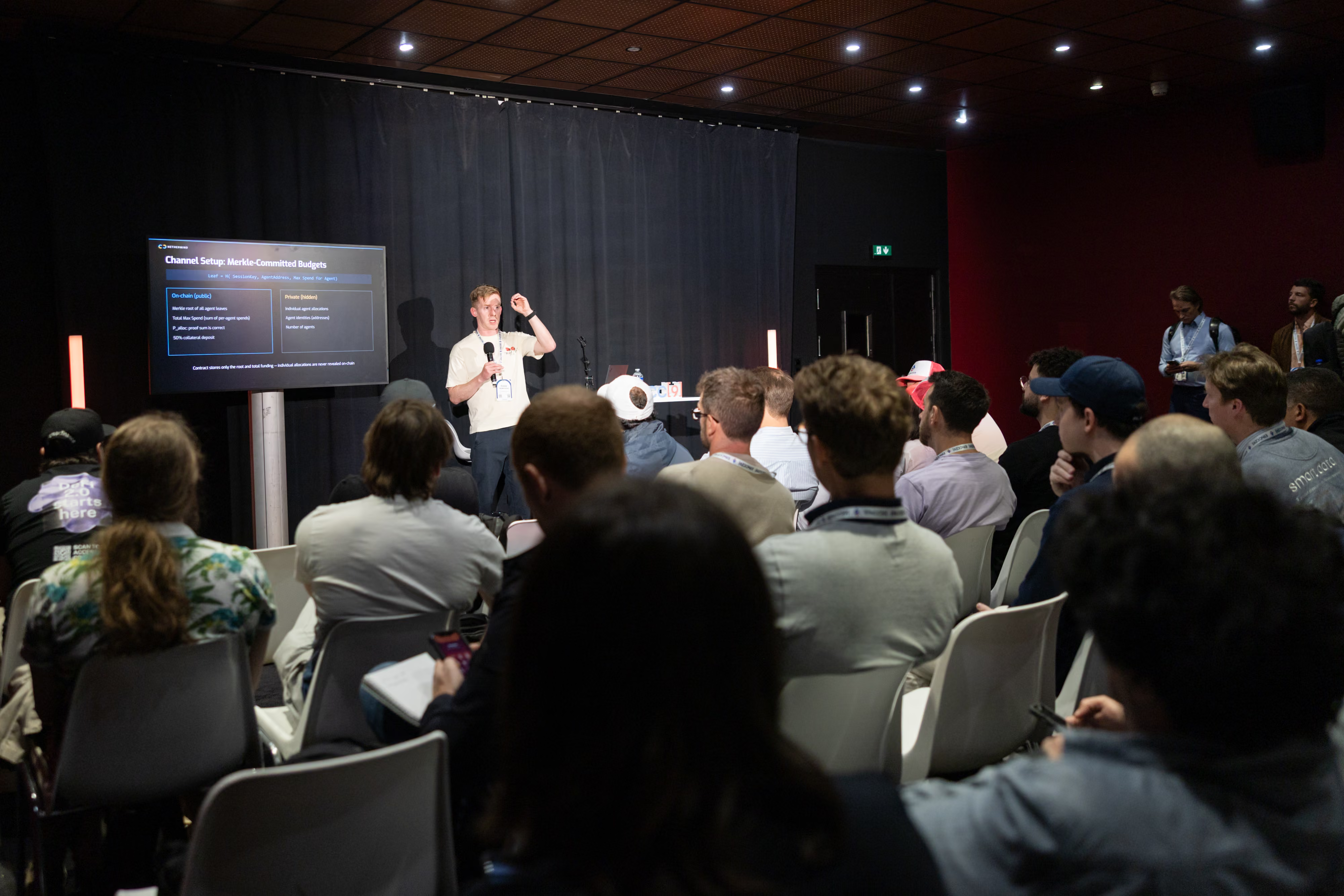
Instead, we run an LLM agent with web search inside an Intel TDX enclave. Anyone can submit any prompt on-chain, and every answer carries a signature chain rooted in hardware attestation that the contract verifies before storing the response. The result is tamper-evident and replayable: you know exactly which code and model produced the answer from exactly which prompt. We walk through the oracle design, plus the mechanism design that ensures agents fulfill their commitments on time.

Most RWAs are "Real World Receipts": you hold a token, but the claim behind it can still be frozen, seized, or switched off by an issuer, SPV, or transfer agent. That makes them fragile exactly where Ethereum is strong.
I apply the walkaway test to these assets: if the team, frontend, and SPV vanish tonight, can you still get your asset out? I also use CROPS values (censorship resistance, open source, privacy, security) as a scoring rubric against real designs, exposing their central points of failure.
Then the constructive half: I design a theoretical RWA that passes these tests, and map which legal and technical pieces exist today and which don't yet. You leave with a rubric to audit any RWA's sovereignty claims yourself.

Ethereum's validator architecture was designed for a much smaller set of continuously online participants. This talk asks what would need to change if Ethereum instead supported more than a billion staking identities, including phones, wallets, and intermittently connected home devices. It examines stake-weighted committee sampling, temporary availability commitments, lightweight ZK and data-availability duties, hierarchical signature aggregation, and a finality model that does not rely on punishing ordinary downtime. It also explores how these ideas interact with ePBS, shorter slots, inactivity leaks, slashing, and post-quantum signatures.
Attendees will leave with a concrete design space, its security tradeoffs, and the key open research questions that must be solved before billion-validator Ethereum is practical.

Many teams with roots in blockchain moved to work on AI infrastructure, hardware, and robotics. Examples include OpenRouter, Menlo, CoreWeave, and many others. I will talk about about the ideas of open source robotics for humanoids, dextrous hands, edge compute deployments, satellites, healthcare devices and other. I will discuss the global supply chain crunch, and how we can design more accessible infrastructure and automation for edge independence.